


Disclosure: This article does not represent investment advice. The content and materials featured on this page are for educational purposes only.
“Accepted at 150M+ merchants worldwide” sits beside an email signup field and a card-network logo. For an American crypto holder, that combination looks like permission to apply. It isn’t. The search for the best no kyc crypto card for usa starts with a less prominent detail: whether the issuer accepts residents of the applicant’s state.
That distinction matters for Americans living at home, freelancers moving between countries, and travelers spending in the United States. A card can work at a Manhattan restaurant while remaining unavailable to someone with a New York residential address. The strongest comparison begins with eligibility, then tests privacy, funding costs, and payment features.
Worldwide acceptance identifies the best no kyc crypto card for usa
False: merchant acceptance describes where an existing card can work, not who can obtain one. A Visa or Mastercard logo doesn’t answer an American applicant’s residency question.
Before comparing crypto cards for US residents, applicants should find the issuer’s country restrictions and any state exclusions. Residence, citizenship, and current location are different facts; an American visiting Israel and an Israeli living in Florida shouldn’t assume the same application rules apply.
The practical test is a written answer tied to the actual card product, rather than a general statement about the platform. A provider may sell several cards with different issuing arrangements, so approval for one product doesn’t establish eligibility for another.
- Identify the card product and the company responsible for issuing it.
- Check whether US residential addresses are accepted, including the applicant’s state.
- Ask which details are required before funding, issuance, and continued use.
- Save the applicable terms before transferring cryptocurrency.
A working signup page isn’t enough. Neither is a successful account registration, because access to a wallet and eligibility for its associated card can be separate decisions.
Eligibility is the entrance requirement; merchant acceptance is a feature to compare afterward.
Where the answer remains unclear, the product belongs on a conditional shortlist, not at the top of a US ranking. That standard also prevents a common purchasing mistake: paying a creation charge before discovering that the intended card isn’t available at the applicant’s address. Support should resolve the question before money moves, not after.
A document-free signup makes a card anonymous
False: avoiding an identity-document upload reduces one kind of disclosure, but it doesn’t make payment activity untraceable. An anonymous crypto card is a search phrase, not proof that no records exist.
The best no kyc crypto card for usa should be evaluated by the information collected throughout its use, not just the first registration screen. Email addresses, funding transactions, purchase records, and information supplied during support requests can all matter to that assessment.
Applicants should distinguish between data a provider explicitly requests and records created by using its service. They should also check retention, account-recovery procedures, and whether additional information can be requested later.
Document-free signup: An account-opening process that doesn’t require an identity-document upload at that stage.
Transaction traceability: The ability to follow or connect payment records, including public blockchain transfers and a provider’s internal account activity.
For example, funding a card from a public Bitcoin address leaves a blockchain transaction even if registration required only an email. Converting that deposit into a card balance doesn’t erase the earlier transfer.
Consumers who want to spend crypto privately therefore need a narrower, more useful goal: reduce unnecessary personal-data collection while understanding which records remain. A crypto card without verification can meet the first objective without delivering complete anonymity.
Privacy policies deserve particular attention when comparing an unfamiliar service with an established exchange. A short signup form offers convenience, but clear explanations of storage, sharing, and account access provide a better basis for judging privacy over months of ordinary spending.
Every crypto-funded card handles deposits the same way
False: the point at which cryptocurrency becomes spendable card balance changes how the product works. Some buyers expect to retain their coins until a purchase, while others want a balance fixed when they load.
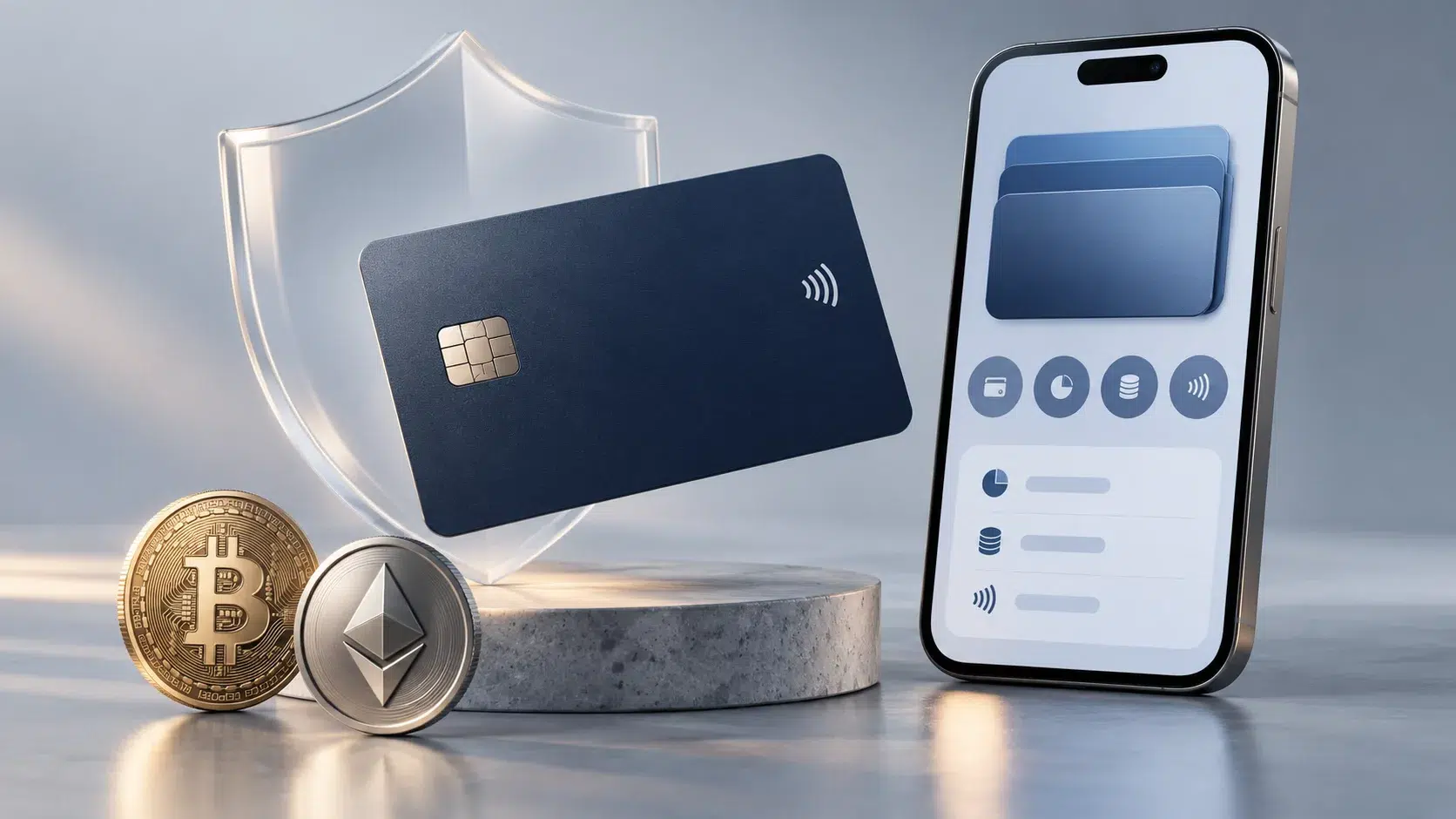
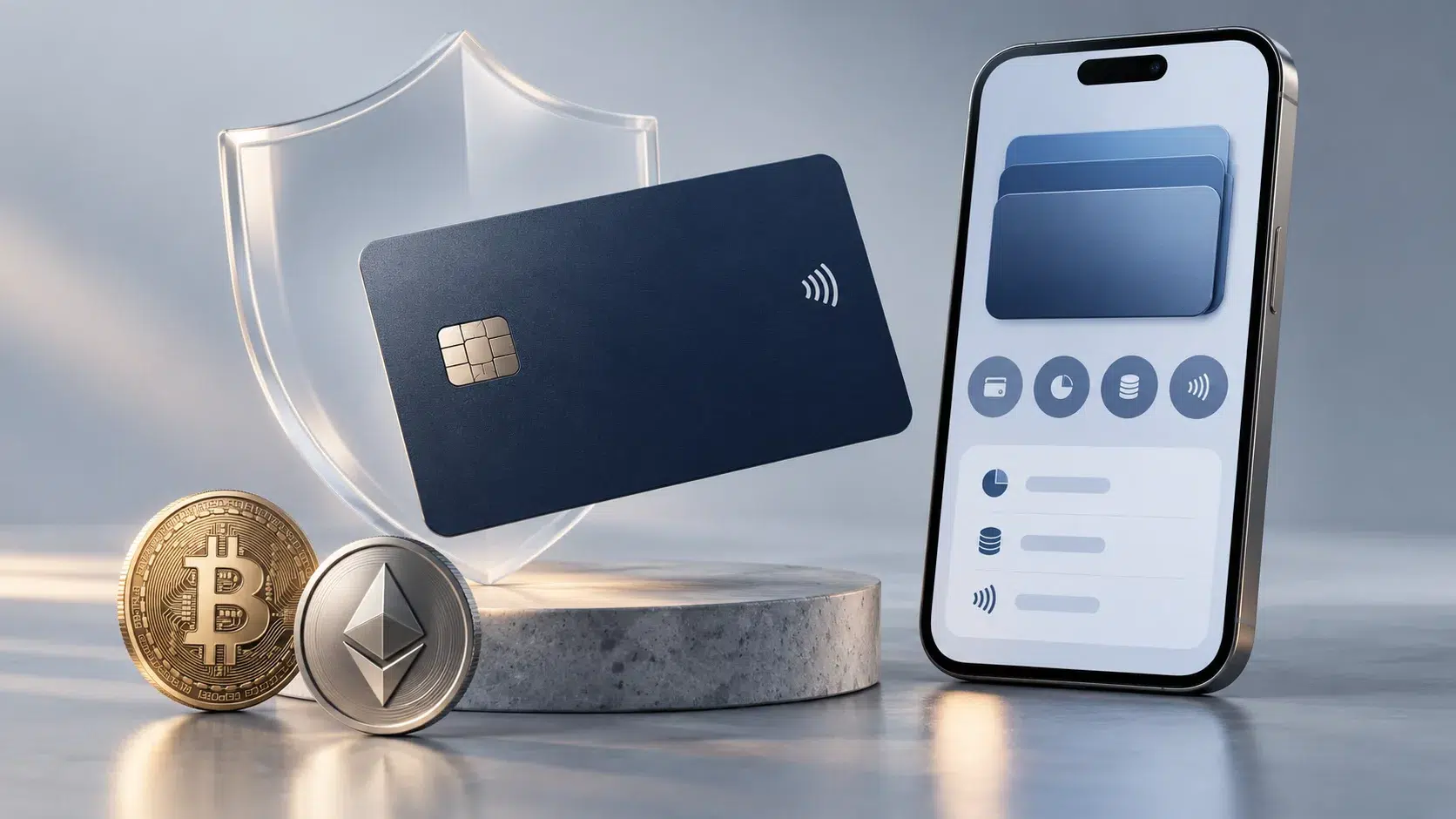
For a concrete example, WaldenPay’s crypto virtual card supports funding with 135+ cryptocurrencies across 35+ networks and converts deposits to card balance at loading time. Its standard signup requires an email without identity documents, and the card is issued in minutes after funding; US-resident eligibility still needs confirmation before payment.
This structure means subsequent coin-price movements don’t change the amount already converted into card balance. It also means the original cryptocurrency isn’t simply sitting behind every purchase waiting to be sold at checkout.
When comparing the best no kyc crypto card for usa, supported assets should be checked alongside supported networks. A USDT virtual card is only useful if its deposit instructions match the network holding the customer’s USDT.
- Match the asset and network shown in the deposit instructions.
- Check the minimum load and the balance credited before confirming.
- Separate wallet deposits from the step that funds the card.
- Confirm when the card becomes available for payment.
The example service has a $25 minimum top-up and provides unique account-wallet deposit addresses per supported network. Those are operational details worth comparing, especially for freelancers receiving different assets.
But a long coin list shouldn’t outweigh clear instructions. The useful measure is whether a holder can move an existing asset into spendable balance without an unnecessary exchange or an avoidable network-selection mistake.
The lowest advertised percentage is the cheapest card
False: a headline rate can depend on spending volume, while a fixed creation fee weighs heavily on occasional users. Crypto card fees should be compared against a realistic spending pattern rather than the provider’s lowest possible rate.
In the same example, card creation costs $10, monthly maintenance is $0, and the top-up fee starts at 5%. Automatic discounts depend on rolling 30-day card spend, not merely the amount deposited into the account.
The confirmed schedule falls to 4.75% at $2,000, 4.5% at $5,000, 4.25% at $10,000, and 4% at $25,000. It reaches 3.5% at $50,000 and 3% at $100,000, with individual pricing at $250,000 or more per month.
Consider an illustrative comparison using a $200 fee-assessment base: 5% is $10, and adding the one-time creation charge produces $20 in those two charges. This isolates the arithmetic; the funding screen determines how a chosen payment amount becomes credited balance.
For that occasional spender, the no-KYC card comparison guide offers a checklist for assessing whether document-free setup justifies the cost. The best no kyc crypto card for usa must fit that small-spend case, not just a high-volume advertisement.
By contrast, 3% of an illustrative $5,000 assessment base is $150, compared with $250 at 5%. That lower percentage applies only after the relevant spending threshold has been reached.
And loading a large balance doesn’t itself qualify the holder for the lowest tier. A buyer expecting sporadic purchases should budget at the starting rate rather than treating future discounts as money already saved.
A virtual card is only useful for online shopping
False: a virtual card with mobile-wallet support can also serve ordinary in-store spending. The more relevant comparison is whether the provider supports the holder’s phone and intended payment method.
Apple Pay and Google Pay support can turn digital card details into a contactless payment option. Without that feature, a virtual card may still handle websites and subscriptions but be less practical at a supermarket or restaurant.
The best no kyc crypto card for usa therefore needs more than fast issuance. Its payment tools must match the purchases that prompted the application.
| Option | Onboarding distinction | Decision before funding |
|---|---|---|
| WaldenPay | Email-only standard signup | Confirm US and state eligibility |
| Coinbase Card | Identity-verified account | Check current state availability |
| Crypto.com card | Identity verification required | Check current US product terms |
Coinbase Card and Crypto.com’s card are useful comparison points, but their identity checks put them outside a strict document-free requirement. Their current application terms should be checked separately rather than treating an exchange account as automatic card approval.
The email-only example supports both Apple Pay and Google Pay, as well as online use of card details. Its Telegram bot also handles card ordering, recharging, balance checks, and transaction alerts.
That combination may suit someone managing spending from a phone. Another buyer may place more weight on account recovery or the ability to resolve a declined purchase through support.
A sensible first-use sequence is to add the issued card to the intended mobile wallet and make a modest planned purchase before relying on it for routine spending. This tests the actual workflow rather than the feature list alone.
The best no kyc crypto card for usa is the same for every buyer
False: a defensible winner depends first on confirmed eligibility, then on the buyer’s priorities and spending volume. No amount of convenience compensates for a product that doesn’t accept the applicant’s residence.
For occasional spending, the starting top-up percentage and one-time creation charge deserve the most weight. A buyer making infrequent purchases has little reason to favor discounts tied to substantial rolling spending.
A freelancer funding a card regularly has a different calculation. Supported deposit networks, clear loading mechanics, and a usable mobile wallet may matter more than avoiding every initial charge, particularly when those features remove extra steps from an established payment routine.
Privacy-minded applicants should keep a separate score for personal-data collection. Email-only registration is a meaningful distinction, but it shouldn’t be converted into a claim that transactions leave no record.
WaldenPay stands out as an option for document-light setup, broad crypto funding, and mobile-wallet payments. Its disclosed $10 creation fee and 5%-to-3% volume-based top-up schedule also make the cost structure possible to compare, but a US recommendation remains conditional on confirmation of residential eligibility.
That is a stronger conclusion than an unsupported overall ranking. It tells American readers both why the product merits attention and which unanswered question can still change the decision.
The final comparison should preserve those separate judgments: available to the applicant, acceptable data collection, affordable at expected volume, and suitable for intended purchases.
Next time an offer claims to be the best no kyc crypto card for usa, the applicant should check current state eligibility, signup requirements, and the fee shown for the intended load before sending funds.
Disclosure: This content is provided by a third party. Neither crypto.news nor the author of this article endorses any product mentioned on this page. Users should conduct their own research before taking any action related to the company.
